

Welcome to the archive and history hub dedicated to Number One (originally stylized as No. 1) the vibrant, cheekily opinionated, and fiercely loved British pop weekly that defined the sound and style of the 1980s.
Launched on 7 May 1983 by IPC Magazines, Number One entered the market with a clear mission: to take on the reigning teen pop titan of the era, Smash Hits. While its rival was published fortnightly, Number One proudly leaned into its weekly turnaround with the slogan
"Our strength is our weekliness."
For nearly nine years—running right through until its final unannounced closure in February 1992, the magazine captured the zeitgeist of synth-pop, new wave, and chart-pop. It charted the rise of mega-acts like Wham!, Duran Duran, Bros, and Kylie Minogue, filling millions of teenage bedroom walls with its iconic centerfold pin-ups.
BBC Magazines took over publishing from IPC Magazines from October 1990. When Number One came to an end in 1992, it was incorporated into the BBC's Fast Forward magazine.
Number One's demise went unannounced - the final issue carried details of the features and interviews that would appear in the next issue, but remained unpublished.

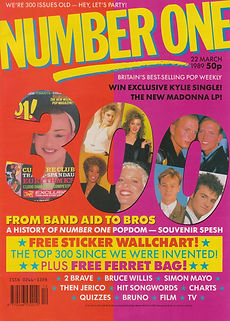
What made Number One truly unique was its attitude:
Because it was published every week, it could deliver up-to-date UK Singles and Albums charts much faster than its fortnightly competitors. Until 1990 however, these were the unofficial Network Charts (1985 - 1990). Previously the magazine had used the NME Top 75 singles & albums (March 1983 - December 1984). From October 1990, the full official Top 75 Chart was used until the magazine's demise.
Readers eagerly flipped straight to the lyrics page (Songwords), witty single and album reviews, star columns (including contributions from producer Pete Waterman and DJ Bruno Brookes), and notoriously funny letters pages.
Unlike Smash Hits, Number One made no secret of the fact the two were in direct competition and would very often refer to said magazine as "Sm*shed Tw*ts" and other less flattering terms. The approach it took to feature writing was more personal, in that the writers would show more of their own character and were not afraid to criticise their interviewees, where Smash Hits would remain more neutral. In the end Smash Hits won out due to its higher page count and glossier appearance, while remaining at a similar price to Number One. By early 1990 Number One was selling in excess of 130,000 copies per issue, but this paled in comparison to Smash Hits' 780.000 per issue